"AND EVERYTHING IN BETWEEN"
☻
"AND EVERYTHING IN BETWEEN" ☻
Writing from Columbus, Ohio
Thoughts on the creative process
Or: Why I Learned to Love the Details
Everything I do is about connecting real people and real moments from the offline world to the online world. I am fascinated with the process of creative arts. But I believe that process should be demystified.
I'm making a documentary on photography that will break down the creative process, while giving you an all-access look into the life of three professional photographers.
The documentary is a look into the question: "In the age of Instagram, what sets a professional photographer apart?"
I know that's a ridiculous question, but there are photographers and filmmakers that believe better equipment will make them better at what they do.
As I was sharing my project on Twitter, I connected with Francis Dierick, who replied:
"My two cents: what sets apart the artist from the instagrammer is a love for the *process* rather than the result."
He also has a blog post titled Preserve the Process that, at it's core, is really about what I aim to explore. With my video work, I'm simply capturing what's around me. But it's this way of looking at things, this perspective and process that I continue to devleop that allows me to notice things other people are too busy to see. And when I get to have these brief moments of connection with real people, sharing moments that they missed, or didn't get to experience, or experienced from a different perspective, that's why I do what I do.
With this documentary, if funding is successful and I get to make the film, I hope to capture that process. I want to break down what three successful and passionate photographers are doing that sets their work apart. And by placing a supreme value on this process, I believe we can all learn something together. If this is successful, I'm not stopping at photography. Who's with me?
Portrait is now funding on Kickstarter, but can only be made if the goal of $12,000 is reached by Friday, May 4 at 10pm. You should support Portrait on Kickstarter here.
My StartupBus Experience
I was sitting in a Pizza Hut in Marietta, OH with close friend Zach Frankart. We had just arrived to shoot at a manufacturing plant the next day for OnScene Productions. Then I get a call from Eric Leslie (of OnScene) asking if I'd be available to shoot for a company in San Francisco as they take a bus trip to Austin for the South by Southwest Interactive festival. I couldn't say yes fast enough.
Fast forward and after making it to San Francisco and the StartupHouse, we were set to leave at 6 am. A bus full of entrepreneurs trying to conceive and launch a startup in 72 hours. Buses were also launching from Stanford, New York City, Mexico City, Boston, Cincinnati and more.
On the bus from San Francisco to Mountain View, CA was Robert Scoble, and for the brief ride he oozed knowledge and was an all-around great guy. He hopped over to the Stanford bus and rode the rest of the way to our stop in Los Angeles. Also on the bus was TechCrunch video producer John Murillo, another nice guy to have the opportunity to chat with in a few brief moments of down time.
I watched as the teams formed and ideas came and went. Eventually, they settled into five ideas (technically six, but one team, HipType, defected to the Stanford bus because it had more open seats). The companies were: Cerealize, Expensieve, Gaggle, Kinetic.ly, and Beeliner.
I watched as the developer for Expensieve had an iPhone app ready to launch in three days. Gaggle and Cerealize had impressive webapps up and running by the time we hit Austin. I know how little sleep I got during the trip, so I can only imagine how hard these busepreneurs were working.
It was inspiring to see these ideas come to fruition in such a short period of time. I can relate to some degree, when developing an idea for a short film or video, and to see what they could do under the circumstances (long stretches of no WiFi, and the bus from Mexico City didn't even have power on the bus) was impressive to say the least.
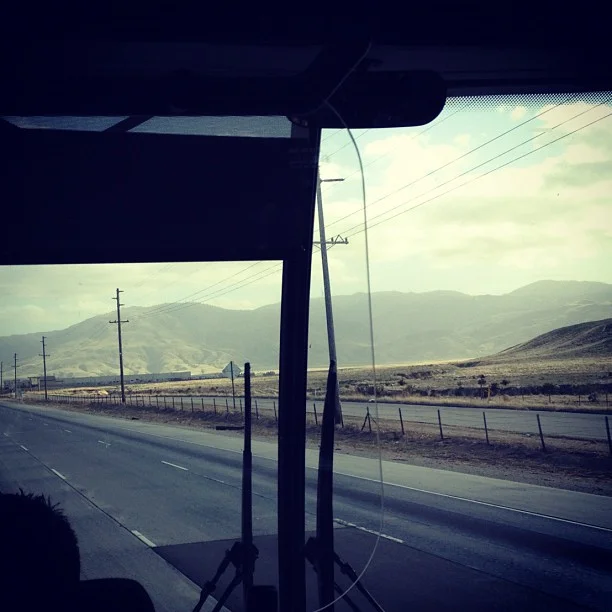
I saw a lot of great sunrises and sunsets along the way - we were up by 6am every day and rode the bus until 9 or 10pm.
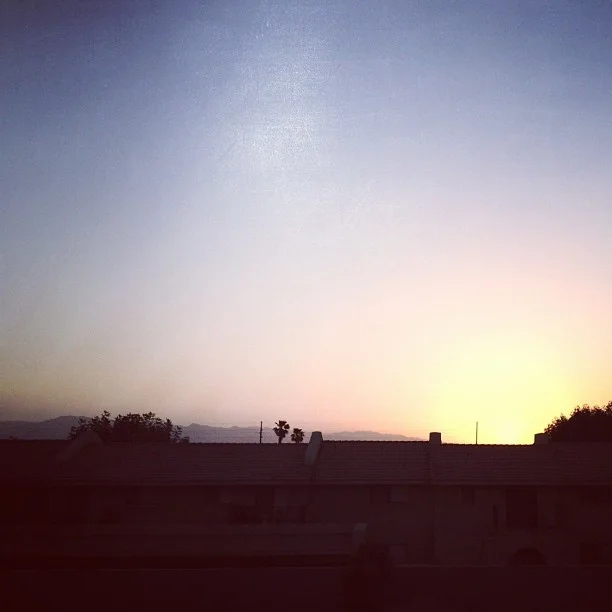
Indio, California
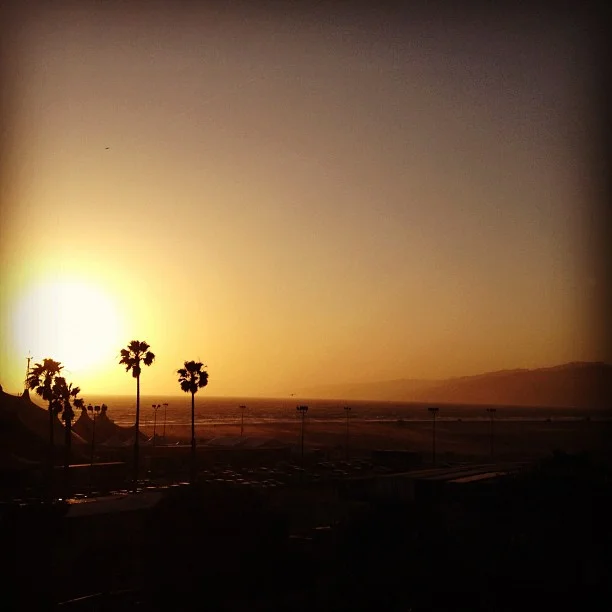
Santa Monica, California
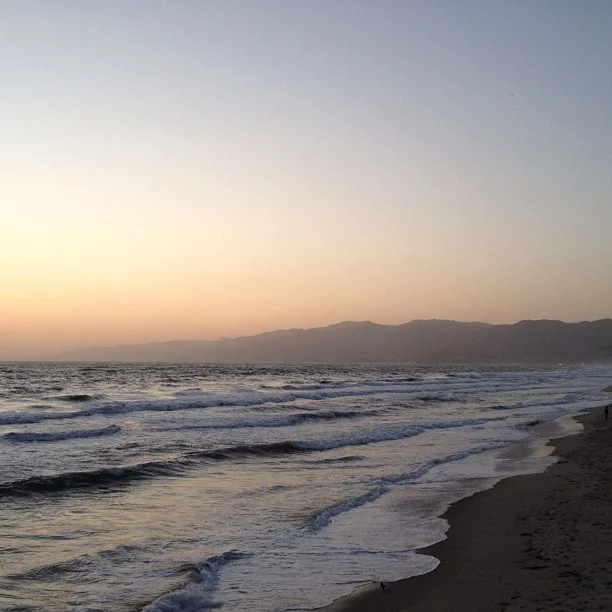
From the Santa Monica Pier
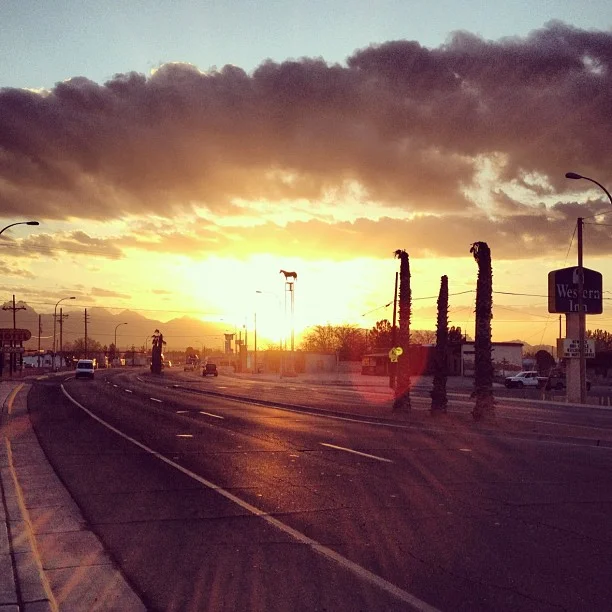
Las Cruces, New Mexico
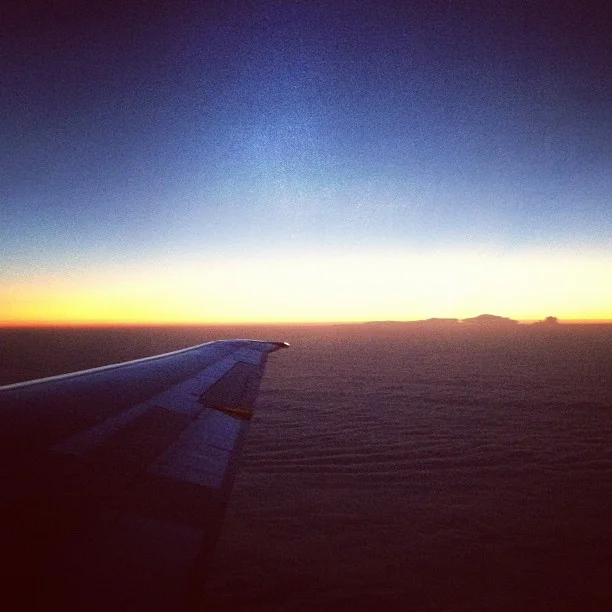
Flight from Austin to Dallas on my trip back home
---
Things I took away from the trip:
It's actually not that bad riding a bus for 15 hours a day. Most of the time.
Sunrise is the best time of day.
It's insane to launch a product in 72 hours, but with the right team, it can be done.
Content is king. The apps with the most concrete set of deliverables all rose to the top.
Be prepared to sleep - A LOT - at the end of a trip like this.
In the end, there's one thing I'll remember from the trip more than anything else. One of the budding entrepreneurs was talking to me about my video work and what it was like to come up with a video, shooting and editing on a bus over the course of three days. Not unlike their companies, my project required a lot of fast thinking and long days. He made a comment to me that as great as the trip was, he didn't get to take any of it in. The people, the places. His head was always down in a computer, hard at work. While the experience was rewarding, he missed a lot of the small moments, the memories.
And it hit me. That's where my job lives. I live in that singular moment. I have to capture and produce it to share with others. So the ones on the bus, for the ones that weren't there, or couldn't be there, or may want to be there one day can experience it. A single moment in time like a sunrise or a good conversation will pass quickly, and it's my job to make sure it lives on forever.

The team that ended up winning the competition at SXSW was Cerealize from the Silicon Valley Bus. The final competition was judged by Dave McClure (500 Startups), Christine Herron (Intel Capital), Naval Ravikant (AngelList), David Cohen and Katie Rae (TechStars).
And that's it! In a week, by bus or by plane I traveled: Columbus, OH -> Dallas, TX -> San Francisco, CA -> Mountain View, CA -> Santa Monica, CA -> Indio, CA -> Phoenix, AZ -> Las Cruces, NM -> San Antonio, TX -> Austin, TX -> Dallas, TX -> Columbus, OH.
It's good to be home.
Resources for Beginner Filmmakers
If you're into DSLR filmmaking, there's no doubt you've heard of these filmmakers. If you're new to the scene, I wanted to collect a quick list of some of the best resources and people to follow. These guys will teach you quite a bit, and the best part is they all will take the time to interact with you online and on Twitter. I've learned about as much as I did in my four years of school as I have in the last year following these great talents.
Vincent Laforet - Director, Photographer, Director of Photography and more
website: http://laforetvisuals.com/ + http://blog.vincentlaforet.com/
twitter: http://twitter.com/vincentlaforet
about: Vincent's Wikipedia page says it better than I can.
Laforet shared the 2002 Pulitzer Prize for Feature Photography as a member of The New York Times staff's coverage of "the pain and the perseverance of people enduring protracted conflict in Afghanistan and Pakistan." In 2006, Laforet became the Times' s first national contract photographer. He has been sent on assignment by Vanity Fair, The New York Times Magazine, National Geographic, Sports Illustrated, Time, Newsweek, and Life.
And that's just talking about his photography. He has recently been busy shooting commercials and spending a lot of time sharing his HDDSLR work and experiences.
Starting with Reverie, the first 1080P footage from the Canon 5DMKII, Vincent has been breaking ground in many areas. One of his next stunning pieces was Nocturne, showing the unbelievable low-light capabilities of Canon's 1DMKIV.
If that wasn't enough, he was asked by Canon to kick off The Story Beyond the Still contest with Vimeo. It was a collaborative film effort, with the final product being premiered at the Sundance Film Festival earlier this year. This was the moment that truly inspired me and led to me shooting video with a DSLR. I entered the contest twice, with my first short film Max, and a later entry, Switch.
If that wasn't enough, Vincent is active on Twitter and will actually reply to you many times you send him a tweet. How cool is that?
Shane Hurlbut, ASC - Cinematographer
website: http://hurlbutvisuals.com/ + http://hurlblog.com/
twitter: http://twitter.com/hurlbutvisuals
about: Shane is serious business, and it's important for DSLR filmmaking to have someone with his credibility fully on board. He shares some great insight on his blog, and I recommend taking a moment to check out some of his DSLR work, such as "The Last 3 Minutes" Directed by Po Chan.
Ryan Koo - Independent Filmmaker, Blogger
website: http://nofilmschool.com
twitter: http://twitter.com/ryanbkoo
about: Ryan has one of the best blogs on filmmaking. He's an award-winning blogger and filmmaker, and his free DSLR Cinematography Guide is a resource that can't be beat. Follow this guy now so you can say you knew him before he was a big deal.
Nino Leitner - Filmmaker, Director of Photography
website: http://ninofilm.net/
twitter: http://twitter.com/ninoleitner
about: From Vienna, Austria, Nino is an experienced filmmaker with a lot of work in documentaries and commercial work. He is currently running a great series of blogs on "How to Reach 1 Million Video Views" - Part 1 - Part 2
His short "February" is some of the first footage we saw from the Canon Rebel T2i/550D and was a big influence on me early on in my HDDSLR video shooting.
Caleb Pike - Blogger, Camera Operator, Editor
website: http://pikevisuals.com/ + http://dslrvideoshooter.com/
twitter: http://twitter.com/calebpike
about: Through his videos and blog posts, Caleb has probably taught me more about gear than anyone or anything. He really cares about connecting with others who are interested in shooting video with a DSLR and it shows in his work. I can't say enough good things about Caleb, and I'm going to leave it at that, if you aren't already off checking out his great reviews and blogs.
Sebastian Wiegaertner - Filmmaker, Cinematographer, Editor
website: http://wiegaertnerfilms.com/
twitter: http://twitter.com/wiegaertner
about: I'm pretty sure Sebastian never sleeps. This guy works non-stop, and squeezes some amazing images out of DSLRs. Take a minute and check out Bamberg, shot with the Canon 7D.
8 Tips on Using Twitter Hashtags
With more people joining Twitter every day, the number of people who simply don't understand how to tweet effectively is growing. One of the biggest offenses is the misuse of hashtags. I don't really have any pet peeves, but hashtags on Twitter are pushing it. Here are eight pieces of advice in regards to hashtags. Identities have been withheld to protect the ignorant.
1. Hashtags are meant as a way to categorize your tweets. A good example is during the National Hockey League Draft weekend, you'll see a hashtag like #NHLDraft, which allows hockey fans to search for other tweeting fans. Likewise, if you don't follow hockey and you're using a Twitter application like Tweetbot or Tweetdeck, you can filter out these tweets that are not relevant to your interests.
2. Rarely are your hashtags funny. Really.
3. If your tweets are private, no one can see your hashtags, so putting four in a single tweet is completely useless. It's also the quickest way for someone to skim over your tweet when catching up on their timeline. See number 6 for another tip on protected tweets.
4. There's not an instance I can think of that should require more than two hashtags in a tweet. If you have a legitimate tweet with more than two hashtags, it may be best served to separate it into two tweets.
5. There is no reason to hashtag something (with good intentions) that will never get searched for on Twitter. Save yourself the half second it takes to type command-3, I promise I will never search for related hashtags of a minor league hockey players last name.
6. If your tweets are private, and you legitimately want people to see your hashtags, re-evaluate why your tweets are protected. If you want Twitter to remain a small network of your personal friends, that's fine, just understand that no one is seeing your hashtags. If you're trying to promote your site or have a question, maybe making your tweets public and being conscious of presenting yourself in a favorable light is more beneficial.
7. I'm trying to think of a good example of a funny hashtag, and I can't. That should tell you something.
8. If you want to start using a hashtag for your business, project, or whatever else, make sure your followers understand what it is and why it matters. General hashtags are useless, they simply get used by too many unrelated people or organizations.
Hopefully that helps at least one person out there. While you're getting used to Twitter, you should go ahead and follow me here.